Battle climate change from the comfort of your gaming chair
Overall Review: 8.5/10
Studio: Cruxis
Platforms: PC, XBox, Switch (scheduled release 09/25), available on Steam
MSRP: $49
Climate dystopia is stultifying, draining. It can lead to a malaise of hopelessness. It engenders a deep misanthropy as we judge our fellow citizens for inaction, or denialism.
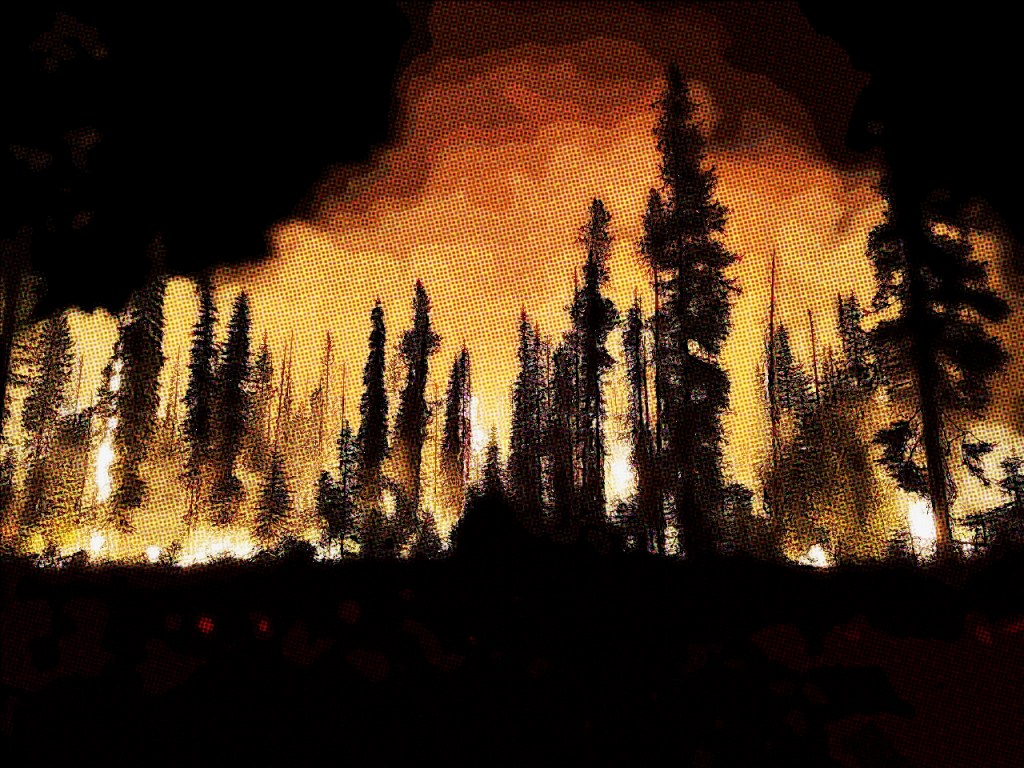
Forest fires are a visceral symptom of higher temperatures. The public has few options when a fire nears, aside from fleeing. “Rate of Spread” puts you in the boots of front-line wildfire crew members as they respond to new starts, battle entrenched “project fires”, or help mitigate fire risk through prescribed burning. Players can fly firefighting aircraft, bombing fires with water and retardant. They can direct resources as they strategize to save homes and natural features. They can directly attack the fires with the tools of the trade; hoses, shovels, and axes.
RoS is set in a fictional western U.S. state called Loma Tinto, which appears to be loosely modelled on Montana or Colorado. It has dry plains in the east and forested plateaus and mountain ranges in the west. You are an incident commader, or fire boss (what a great term!), stationed at a fire base in the town of Wilson’s Falls. The game starts in the spring, and your first tasks are to carry out “prescribed burns” in the national and state forests of Loma Tinto. These are managed from a top-down resource-management-game layout, and you learn how to direct your equipment and people according to the terrain and weather.
Weather nerds will love the depth of data you have at your disposal, including detailed forecasts, soil moisture levels, and “fuel-load” maps (essentially showing you where the flammable forests are densest). It takes a bit of time to understand some of the terms, like fine fuel moisture code and such, but you get the hang of it. The predicted rate of spread is one the most important, and where the game takes its name from. You begin to understand some of the complex factors that drive wildfires, and game studio Cruxis employed U.S. Forest Service fire experts in the game design.
One core strength of the game is the water bombers, or “aerial resources” in firefighting talk. RoS uses a decent flight simulator to put you in the cockpit of bombers, like the Lockheed Electra, Boeing 737, or the venerable and massive Martin Mars. Especially fun are the smaller scoopers – like the Canadair CL-415 or the Air Tractor 802s – that can drink up water from nearby lakes and get nice and close to the fire. The game also has three helicopters one can use for small but precise “bucket drops”. The “BucketCam” mode is great, letting you douse a specific tree if you want to. Each drop is followed by a somewhat repetitive animatic from the ground, and an effectiveness score on your top-down map. The experience of reducing an active fire front to a steaming swath of saved forest is really satisfying, and I’d play the game just for that.
The game is a bit weaker in its attempts to portray the on-the-ground firefighting work. You can be a hotshot crew member, deploying hose, chainsawing down trees, or, get this, digging a fireguard with a shovel! The gameplay quality suffers a bit here, and I never did succeed in digging an effective fireguard. The mechanics of laying a hose line are a bit buggy, with hoses hovering oddly in hilly terrain and refusing to connect with each other until you line them up perfectly. The best thing that can be said about this game mode is that the fire animation is quite good, and the rendering of towering smoke columns looming in front of you is suitably terrifying.
However, the high-level fire boss gameplay is superb. Cruxis, a resource-management game powerhouse, knows how to do intricate detail and depth. You get to watch the fire spread over parts of the state on your map, or take reconnaissance flights in the flight-sim mode. You have to use existing roads and trails to get your resources to the fire, and find water sources for your crews and planes to use. Your crews time out and get exhausted, and your aircraft need downtime for maintenance, so careful planning is required. You start to understand how wind and terrain really change fire behaviour.
There is no winning or total completion in RoS, the goal seems to be to get to the end of the season with the lowest amount of acres burned and structures lost. Let a whole town burn down, though, or crash too many planes, and you’ll be fired and need to start the season again. RoS is one of the better games I’ve played this year, but more importantly, it let me understand wildfires a bit better, and feel less hopeless when I see the reports on the news of the fire season starting up again.
In the Cruxis GeneralChat, I saw that Claire from Marketing was not happy after seeing the pre-print version of the review. She consistently knew her shit so I set up a call with her.
“We lose about 40% of the market right away if press focuses on the climate change thing.”
“But … we give the other 60% a good reason to buy the game?”
“If this hits as a woke game, I’m telling you it’s not good. Can you call this guy and see if he can tone it down a bit?”
“Claire, you know what goes on if we pressure them to change the review. It just doesn’t happen and they’ll put it out on socials that we’re harassing them.”
She sighed and stared out the window. It hadn’t rained in the Bay Area for three-and-a-half months, and the haze was sickly. She pulled at one of her braids.
“It’s a really good review, Claire. I’ve never seen this guy give more than a 7.5. He’s right about those stupid hoses though.”
“Can I at least take out that climate change line from the press kit?”
Now I sighed. “Sure, Claire. Do what you gotta do.”
 Earley Writings
